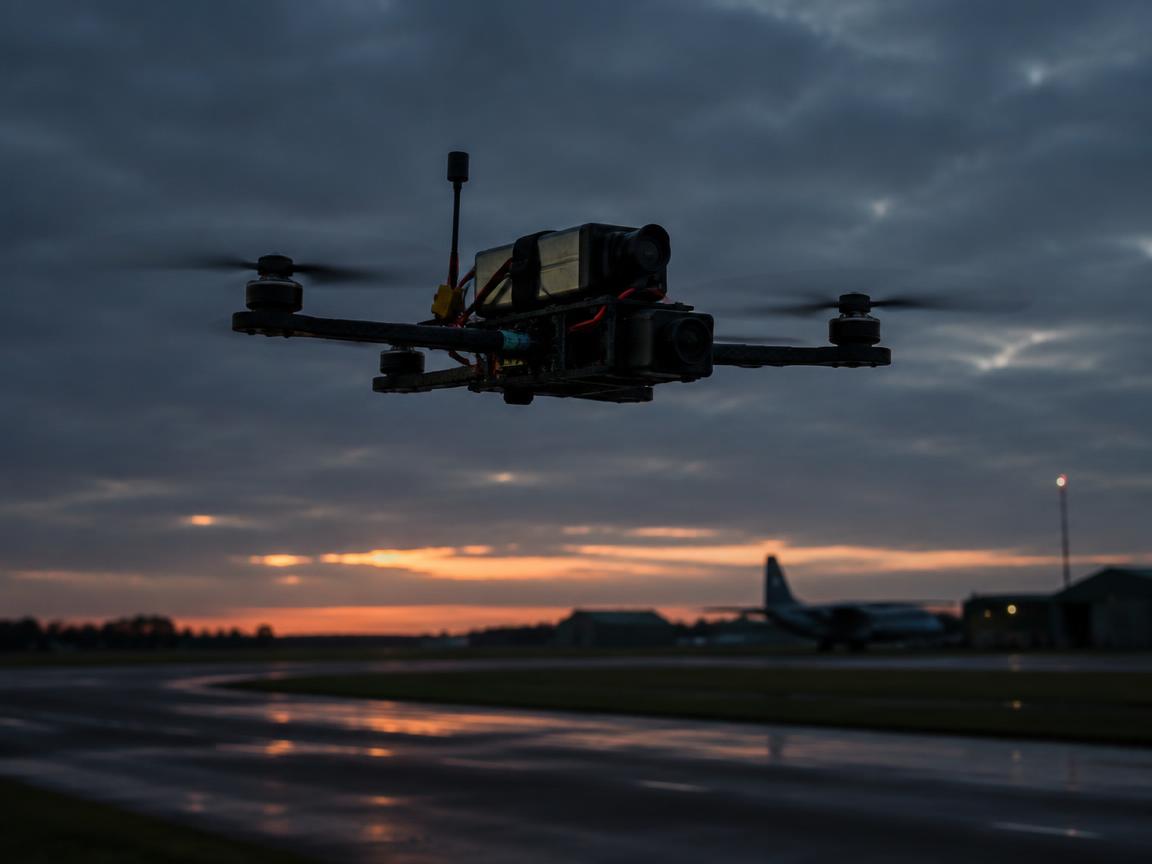
Why Drone-on-Drone Warfare
The Battlefield Has Entered The Sky.
Drone warfare is changing rapidly. The proliferation of unmanned systems, evolving electronic warfare and new methods of controlling and operating drones are creating a new low-altitude battlespace.
Threats now reach sites and services that were never designed to be front-line targets. Defence against them is no longer an equipment question — it is a capability question.
Proliferation
Unmanned systems have spread from specialist units to every operating environment. Low-cost platforms are now present in numbers no single system can absorb alone.
Electronic Warfare
Control links are contested. Jamming, spoofing and spectrum denial shape what can fly, where it can go and how long it survives.
New Methods Of Control
Fibre-optic control, autonomous behaviours and dispersed operation are changing how drones are flown and how they must be countered.
The Answer
The Answer Is No Longer Simply Another Drone.
It is a complete capability designed to operate against drones — aircraft, systems, personnel, training, deployment and sustainment, delivered together.
Aircraft Designed For The Role
Platforms built to operate against drones — not adapted from generic airframes.
Integrated Systems
Control, communications, video and ground systems that work as one capability.
Trained Personnel
Operators, instructors and engineers trained on the systems they will deploy.
Sustainment
The ability to keep capability current, serviceable and independent over time.